Sixth Babylon: A Script Handwritten Font That Elevates Your Brand
Two weeks ago, I held a freshly printed batch of candle labels in my hands—soft kraft paper, minimalist layout, and a font that just… didn’t land. It was friendly enough, but it lacked personality. It didn’t whisper “hand-poured with care” or “made thoughtfully in Portland.” That’s when I searched for Sixth Babylon, a Script Handwritten font I’d seen popping up in designer roundups—and finally gave it a real test drive.
Sixth Babylon for Product Packaging That Feels Human and Handmade
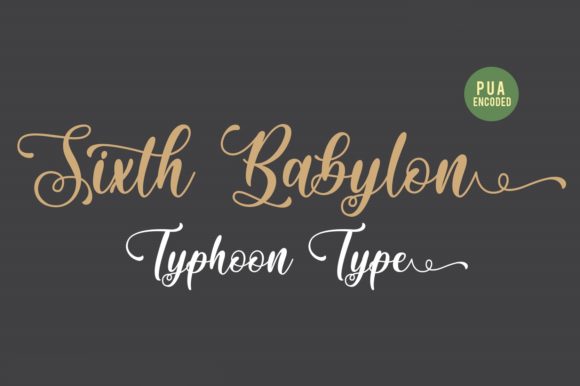
Sixth Babylon isn’t just another handwritten font—it’s got bold swashes that flow like ink pulled across watercolor paper. When I swapped it in for the candle jar labels, everything shifted. The word “Lavender & Sage” suddenly had rhythm and warmth. The swash on the capital “L” curled gently into the “a,” giving each label a quiet confidence. Because Sixth Babylon is designed as a display-focused Script Handwritten typeface, it shines brightest at medium to large sizes—perfect for front-of-pack titles, jar decals, or boutique gift tags. It’s not meant for paragraphs (no one wants to read ingredient lists in swash-heavy script!), but for those key moments where your brand says hello: the top line of a soap box, the banner on a tea tin, the stamped tag on a linen pouch.
Sixth Babylon for Social Media Greeting Cards and Story Highlights
I use Canva daily to build Instagram story templates—seasonal greetings, new product teasers, holiday thank-yous. Before Sixth Babylon, I cycled through free fonts that looked either too stiff or too chaotic. With Sixth Babylon, I found balance: elegant but approachable, distinctive but legible at thumbnail size. Its bold swashes pop against soft pastel backgrounds, and because the letterforms are well-spaced and open, even cropped story frames keep the words clear. I pair it with a clean sans serif (like Montserrat or Inter) for captions—Sixth Babylon handles the emotional hook (“You’re invited!” or “Just launched!”), while the sans serif delivers the details (“Saturday, May 18 • 11am–3pm”). As a Fonts user who works across platforms, I appreciate how consistently Sixth Babylon renders on mobile screens and exports cleanly from design tools.
Sixth Babylon for Logo Design That Stands Out Without Shouting
Your logo is often the first thing people see—and the last thing they remember. I tested Sixth Babylon for a small rebrand of my seasonal greeting card line. At first, I worried the swashes might feel “too much.” But used intentionally—just the business name, no tagline, tight kerning, and a subtle baseline adjustment—the result felt personal, refined, and quietly confident. Sixth Babylon works best for logos with short names (3–6 letters ideal) or two-word combinations where the swash can bridge them naturally. It’s not a utility font; it’s a signature font. Think of it like signing your name at the bottom of a handwritten note—distinctive, intentional, human.
Sixth Babylon for Clothing Tags and Boutique Name Tags
Last month, I ordered custom woven labels for a small run of linen aprons. I wanted something that felt tactile and artisanal—not corporate, not cutesy. Sixth Babylon delivered. Its thick-and-thin contrast mimics real pen pressure, and the swashes add movement without sacrificing clarity. Printed at 10pt on fabric tags, it holds up beautifully—especially when you avoid over-compressing the spacing. Pro tip: Use the uppercase version for maximum impact on tiny tags, and always preview in grayscale to ensure contrast reads well on natural fibers. As a Script Handwritten font built for real-world applications, Sixth Babylon includes alternates and ligatures that help avoid awkward letter collisions (like “f” + “l” or “t” + “h”)—a small detail that makes a big difference on stitched labels.
Sixth Babylon for Advertising and Print Flyers That Feel Inviting
I designed a spring workshop flyer for local makers—paper-based, letterpress-inspired, warm cream stock. Using Sixth Babylon for the headline “Handmade Spring Workshop Series” instantly elevated the tone. It suggested craft, care, and community—not salesiness. Because Sixth Babylon is a premium Fonts option with strong visual hierarchy, it guides the eye naturally: big title first, then supporting text in a simple serif or sans. For print, I recommend testing at actual size—some swashes lose definition below 18pt on uncoated paper. But at 24pt and up? Crisp, expressive, and full of character.
Sixth Babylon for Name Tags and Small-Business Signage
At our first local market this year, I made acrylic name tags for my team: “Hi, I’m Maya — Ask me about our oat milk lavender latte!” Using Sixth Babylon for the name and a light sans for the rest created instant visual rhythm. Customers told me they remembered the names better—and that the tags “felt like part of the café,” not an afterthought. That’s the power of consistent Script Handwritten typography: it ties experience to identity. Just be sure to check licensing—Sixth Babylon is a commercial font, so whether you’re printing 50 tags or 5,000, its license covers physical and digital use for your own business.
Sixth Babylon for Website Banners and Online Shop Graphics
My Shopify homepage banner used to say “New Arrivals” in a generic script. Now it says “Spring Edit” in Sixth Babylon, with the “S” swash trailing softly into the “p.” It’s subtle—but customers notice. They pause. They scroll slower. That’s what great Fonts do: they turn functional text into emotional texture. For web use, I export headlines as SVGs (to preserve crisp edges) and always pair Sixth Babylon with a highly readable system font for body copy. Bonus: its OpenType features—like contextual alternates—add polish when used in professional design apps like Illustrator or Figma.
If you’re choosing Sixth Babylon, you’re not just picking a font—you’re choosing a tone, a feeling, a quiet promise of care. It’s a Script Handwritten typeface built for real small-business moments: the label you hold in your hand, the card you tuck into a package, the sign above your door, the post that makes someone smile mid-scroll. And yes—it’s worth downloading, testing, and using boldly.